Natural Haircare for Little Crowns — Shop the Collection
Interactive Guide
Understanding
Hair Porosity
Every curl, coil, and kink is unique. Understanding your child's hair porosity helps you choose the right products and routine for their individual needs.
The key to achieving amazing, WOW-worthy styling results starts with improving the health and condition of your child's hair. One of the most important things to understand is hair porosity.
The Basics
What Is Hair Porosity?
Hair porosity describes how well your child's hair absorbs and retains moisture. Once you know your child's porosity level, choosing the right products and routine becomes much easier.
Whether your little one's curls are always dry, become greasy easily, or seem perfectly balanced, this guide will help you understand what their hair needs.
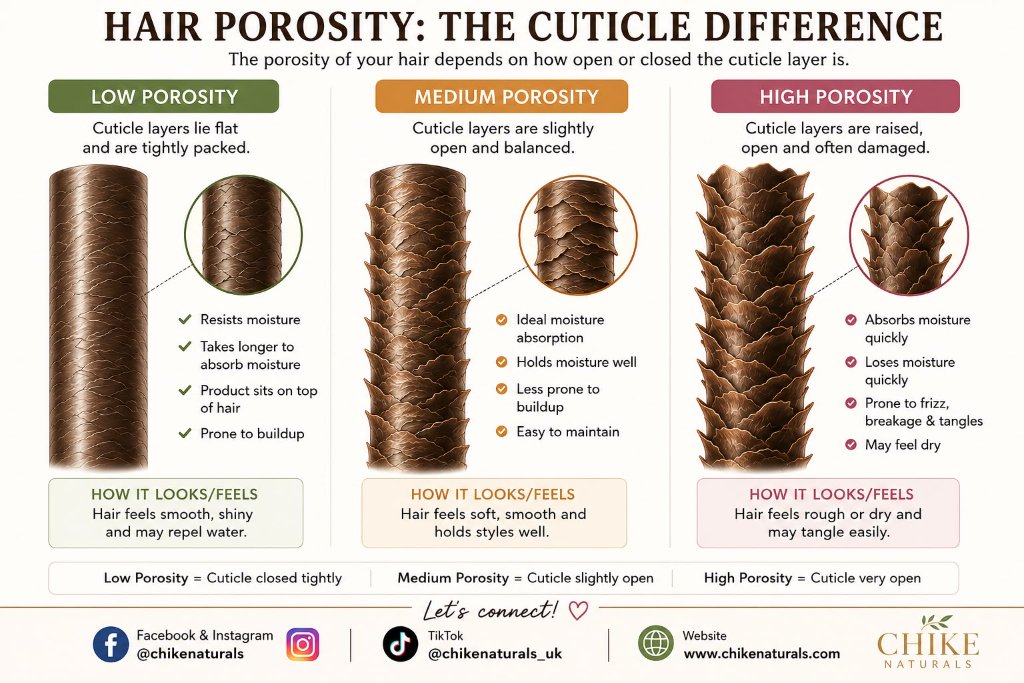
Hair is covered by tiny overlapping layers called cuticles. These cuticles control how easily moisture enters and leaves the hair strand.
Closed cuticles
Moisture enters slowly and stays inside.
Open cuticles
Moisture enters quickly but escapes just as fast.
Balanced cuticles
Moisture enters and stays at a healthy level.
Knowing your child's porosity helps you choose the best routine to keep their hair soft, moisturised and healthy.
High Porosity Hair
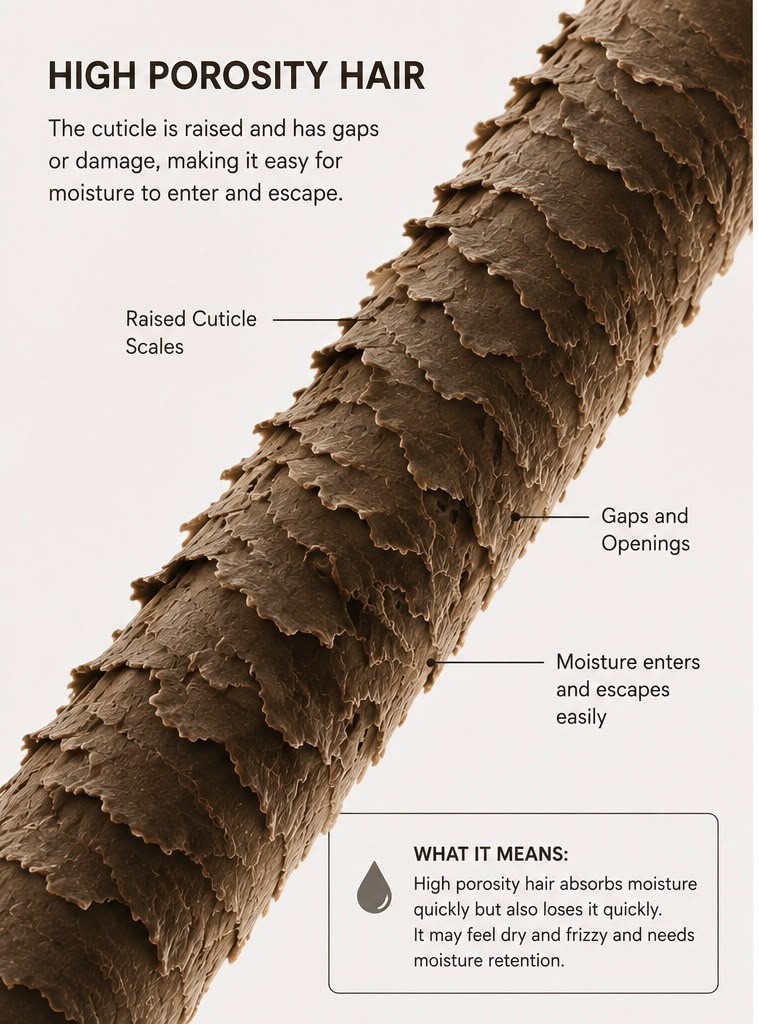
High porosity hair has raised or damaged cuticles. This allows moisture to enter quickly, but it also escapes quickly, leaving the hair dry soon after moisturising.
Signs of High Porosity
- ✔Hair absorbs water very quickly.
- ✔Hair dries quickly after washing.
- ✔Hair often feels rough or dry.
- ✔Hair becomes frizzy easily.
- ✔Hair tangles frequently.
- ✔Ends may look dry or damaged.
- ✔Products seem to disappear into the hair quickly.
If these sound familiar, your child may have high porosity hair.
Best Routine for High Porosity Hair
High porosity hair benefits from the LCO Method because it helps lock moisture inside the hair. An optional Hair Water spray can refresh and rehydrate before you begin.
LCO Method
How to Apply
- 1.Optionally spray Hair Water to refresh and dampen the hair.
- 2.Apply Leave-in Conditioner to hydrate.
- 3.Apply Hair Butter/Cream to moisturise and lock in hydration.
- 4.Finish with Hair Oil to seal, soften, and protect.
Low Porosity Hair
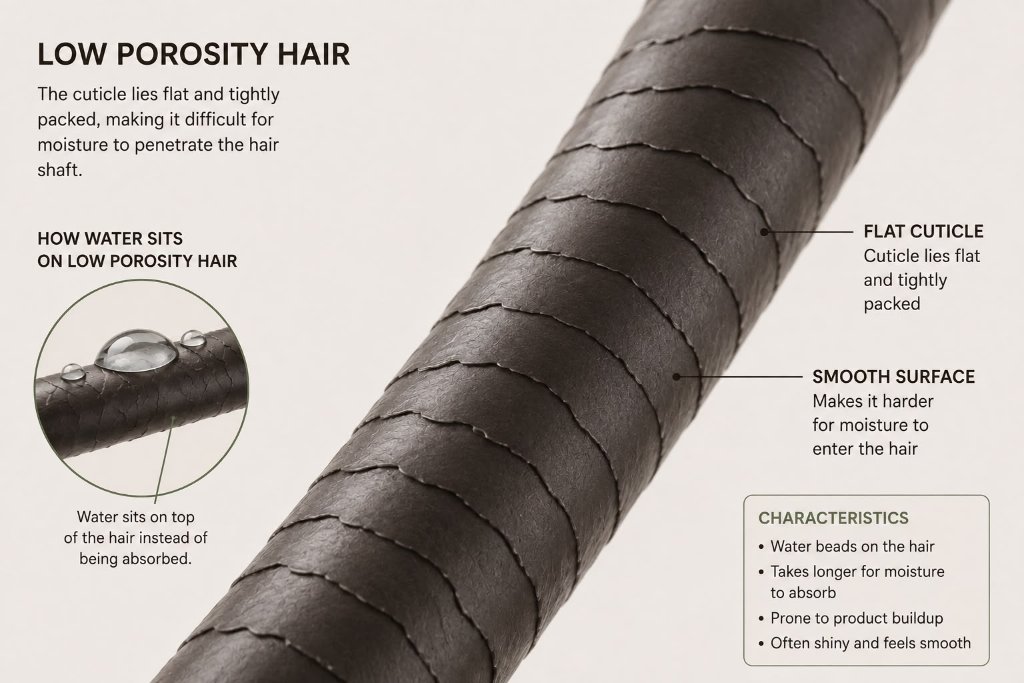
Low porosity hair has tightly closed cuticles. Moisture takes longer to enter the hair, and heavy products can easily build up on the surface.
Signs of Low Porosity
- ✔Water sits on the hair before absorbing.
- ✔Hair takes a long time to get fully wet.
- ✔Hair takes longer to dry.
- ✔Products often sit on the surface.
- ✔Hair may feel coated or heavy.
- ✔Product buildup happens easily.
If these signs sound familiar, your child may have low porosity hair.
Best Routine for Low Porosity Hair
A lighter routine usually works best.
LOC Method
How to Apply
- 1.Apply Leave-In Conditioner to damp hair.
- 2.Apply a light layer of Hair Oil.
- 3.If needed, finish with a small amount of Hair Butter.
Using lighter layers helps avoid product buildup while keeping the hair moisturised.
Medium Porosity Hair
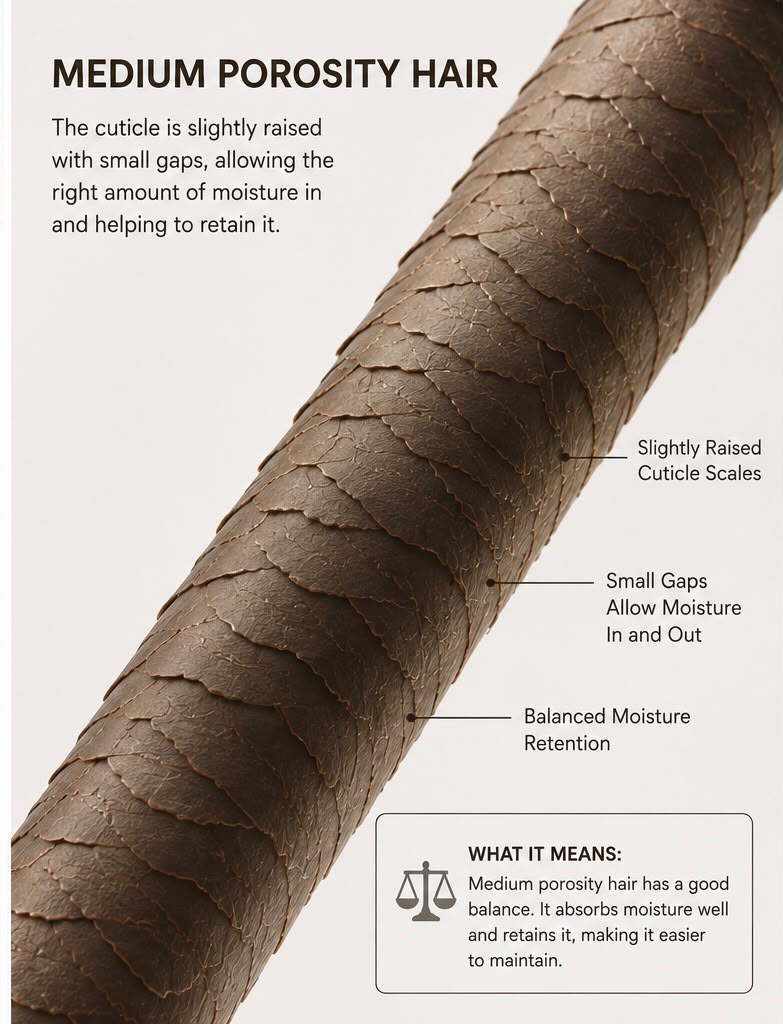
Medium porosity hair has healthy, balanced cuticles. It absorbs moisture well and retains it for longer than high porosity hair. This is often the easiest porosity type to maintain.
Signs of Medium Porosity
- ✔Hair feels soft.
- ✔Moisture lasts for several days.
- ✔Hair responds well to most products.
- ✔Minimal frizz.
- ✔Healthy shine.
- ✔Easy styling.
Which Routine Is Best?
Medium porosity hair usually responds well to either routine.
Adjust the routine based on how the hair responds.
Try at Home
The Hair Porosity
Float Test
A quick way to estimate hair porosity at home is the float test.
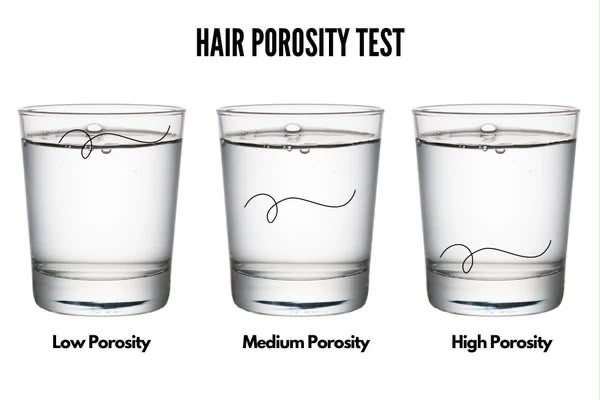
How to Do the Float Test
- 1Wash the hair with shampoo to remove product buildup.
- 2Allow one clean strand of hair to dry completely.
- 3Fill a clear glass with room-temperature water.
- 4Place the strand gently on top of the water.
- 5Wait for 3–5 minutes without touching it.
What the Results May Mean
Hair floats on top:
Often suggests Low Porosity Hair.
Hair stays in the middle:
Often suggests Medium Porosity Hair.
Hair sinks quickly:
Often suggests High Porosity Hair.
Please note: The float test is only a rough guide. Product residue, oils and minerals in the hair can affect the results. The best way to identify your child's porosity is by observing how their hair behaves over time.
Everyday Care
Hair Care Tips for Every Porosity
Find the Right CHIKE NATURALS
Routine
Healthy hair starts with understanding what your child's curls need. Whether your child has low, medium or high porosity hair, choosing the right routine can make styling easier and help keep curls soft, moisturised and healthy every day.