Introduction
Protective styles do much more than look beautiful.
When done correctly, they help retain moisture, reduce breakage and protect growing curls from everyday friction.
The key is choosing styles that are comfortable—not tight.
What Makes a Style Protective?
A protective style should:
- Minimise daily manipulation
- Protect the ends of the hair
- Prevent excessive tangling
- Reduce breakage
- Be comfortable enough for children to wear
If a style causes pain or headaches, it's too tight.
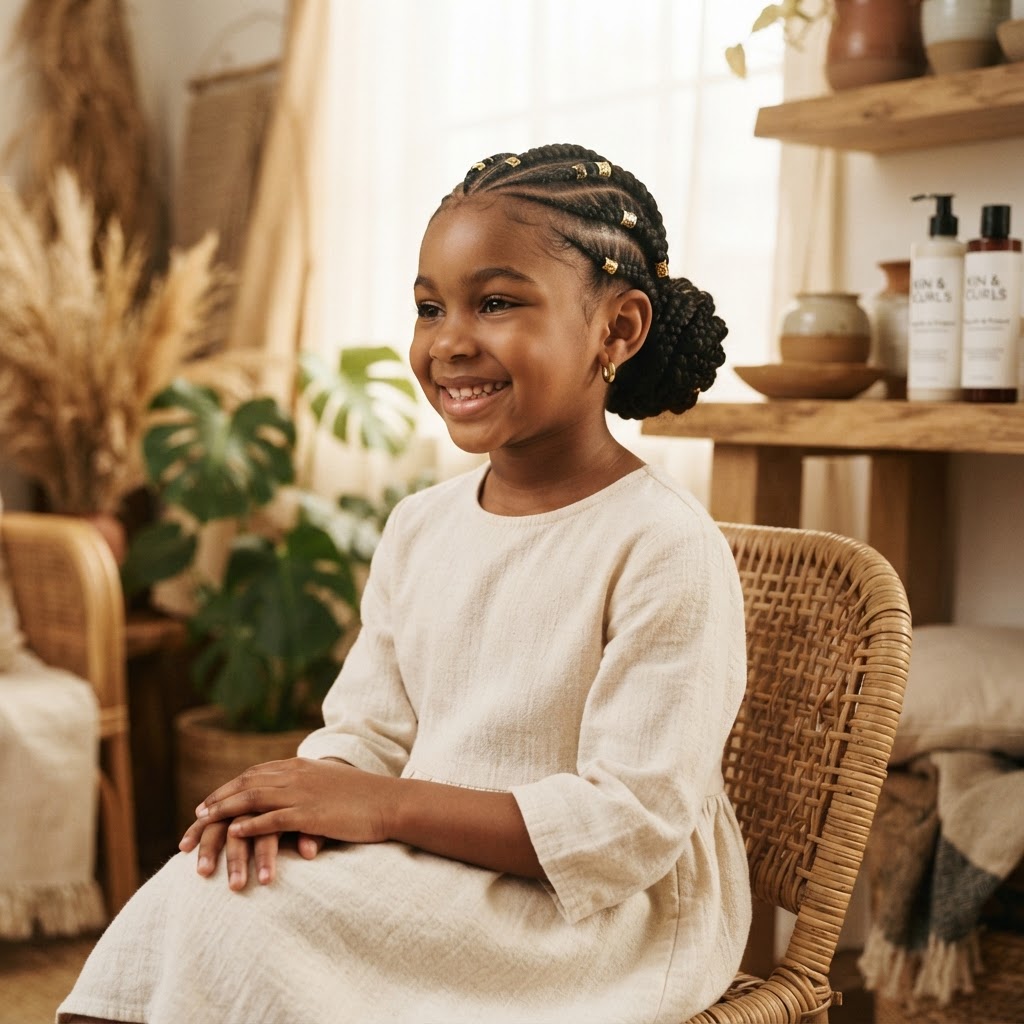
Our Favourite Protective Styles
Two-Strand Twists
Easy to maintain, versatile and perfect for younger children.
Chunky Braids
Gentle, neat and ideal for active children.
Puff Styles
Quick, stylish and great for wash days.
Bantu Knots
A fun protective style that also creates beautiful curls when taken down.
Flat Twists
A softer alternative to tight cornrows that protects the hairline.
Keep Hair Moisturised
Protective styling doesn't mean forgetting about moisture.
Every few days:
- Mist hair lightly with water.
- Apply Hair Butter to the length.
- Massage Hair Oil into the scalp.
Healthy hair grows best when it's consistently moisturised.
Avoid These Common Mistakes
- Braiding too tightly
- Leaving styles in for too long
- Ignoring the scalp
- Skipping moisturising
- Avoid using rubber bands directly on dry hair.
- Keep the hair well moisturised and use gentle, hair-friendly bands to help minimise friction, snagging and breakage.
Final Thoughts
Protective styles should protect—not stress—the hair.
Simple, comfortable styles paired with consistent moisture will keep your child's hair healthy, strong and beautiful.